Discover the rare mushrooms cultivated by Bastien and Bruno at Grenier de la Mosson in Montpellier
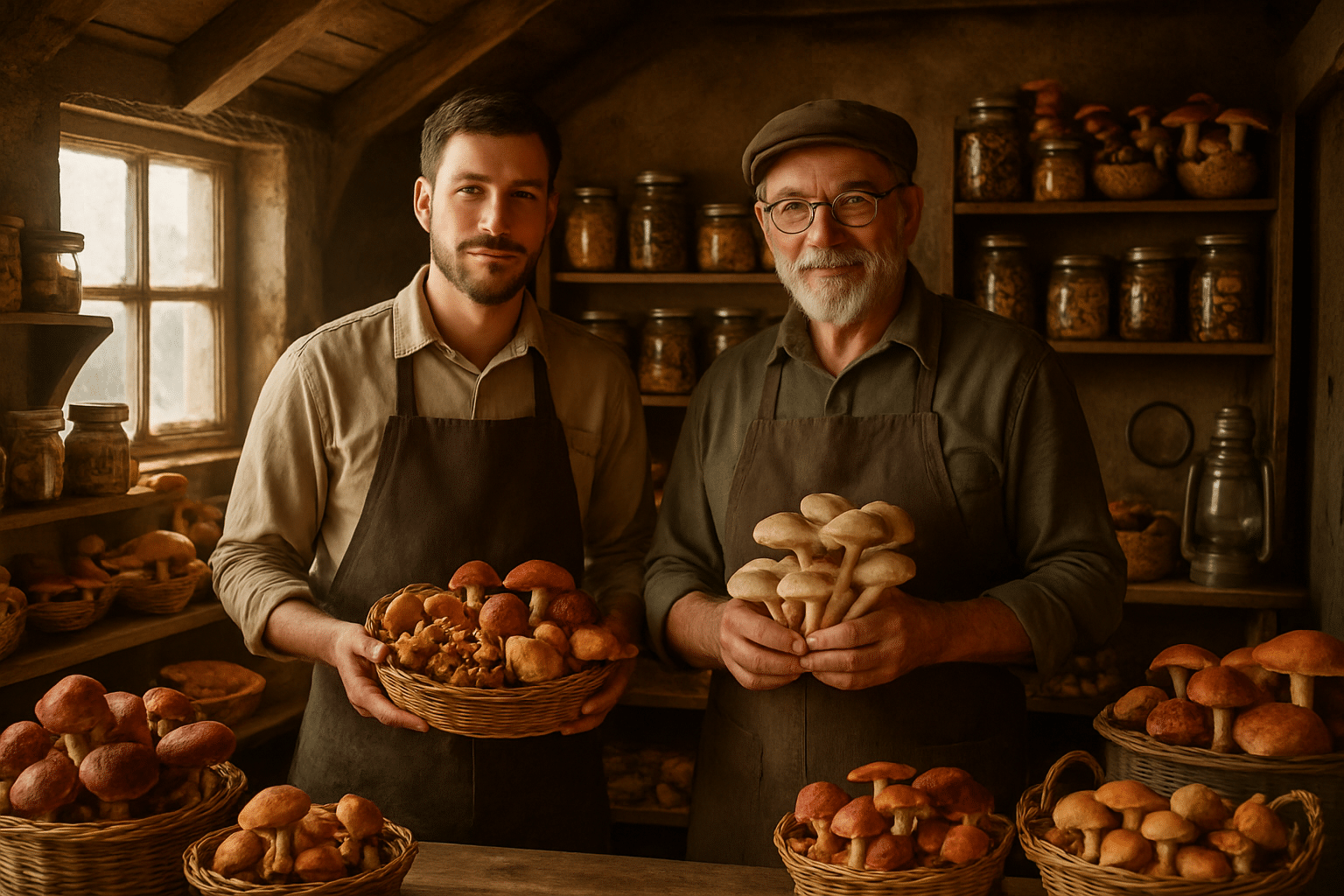
In the basement of the Grenier de la Mosson, Bastien Henckel and Bruno de Roux, two sustainable farming enthusiasts, have teamed up to produce exceptional organic mushrooms. These rare species, such as the Lion’s Mane , the Eryngii, and thePioppino , although unusual, evoke a rich diversity of flavor and nutrition. With their innovative approach, they strive to meet the expectations of restaurateurs by promoting ethical and sustainable cultivation methods. A passionate duo with unusual backgroundsThe initiative was born in the mind of Bastien Henckel, whose passion for mushrooms was passed down to him by his father. After two decades spent in the marine environment at the Grau du Roi aquarium, he felt the need to refocus on an activity closer to nature. It was then that he crossed paths with Bruno de Roux, who, after working for fifteen years in internet marketing, also wanted to change direction. Together, they founded Champellier, with the shared desire to produce food in an environmentally friendly manner.
A Selection of Rare and Prized Species
The mushrooms that Bastien and Bruno chose to cultivate are not ordinary varieties. They chose species that are uncommon in France, such as the Lion’s Mane, Eryngii, and Pioppino. These mushrooms, selected after consulting with restaurateurs, offer a unique diversity in both flavors and textures. The way they enrich a dish makes them highly sought-after ingredients for chefs seeking new ideas. Ethical and Sustainable Cultivation Methods Bastien and Bruno strive to recreate the ideal conditions for their mushrooms.
by mimicking an autumnal environment in their grow room. Installed last February, this room adheres to strict temperature and humidity controls, essential for optimal mushroom growth. Throughout the year, the room is maintained at a constant temperature of 17°C with a humidity level between 90 and 95%.
An innovative and ecological process To initiate mushroom growth, they acquire bales containing a substrate made of straw, wood chips, and cereals. The mycelium is pre-inoculated by their supplier. However, the goal is to control this entire process in the future. Furthermore, at the end of the production cycle, the used substrate, still rich in organic matter, is recycled into compost, used by the region’s vegetable gardens. Local production serving restaurateurs and individualsIn addition to supplying Montpellier restaurants, which are fond of these exceptional products for their menus, Champellier also offers its mushrooms to individuals and at the Aubes farmers’ market. This proximity to the end consumer allows Bastien and Bruno to better understand their expectations and, if necessary, adapt their offerings to meet them.