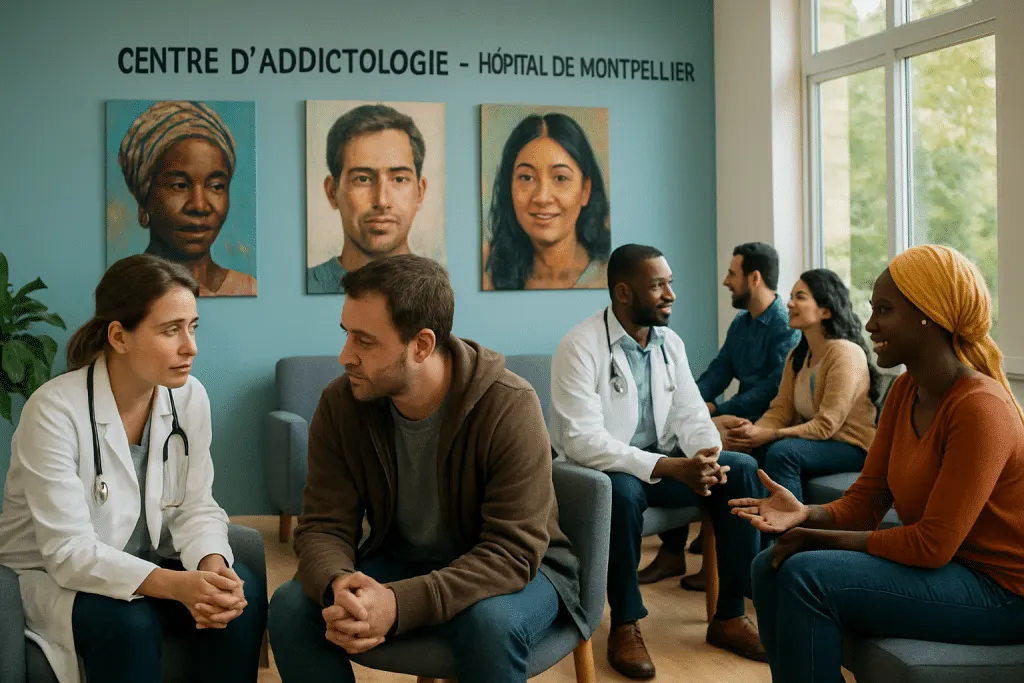
At the Montpellier hospital, an addiction center stands out as a bastion of humanism in the fight against the National Rally
Contents4
At Montpellier Hospital, the addiction center stands out for its humane and inclusive approach, thus resisting the divisive discourse often propagated by the National Rally. By offering person-centered care and fostering dialogue and understanding, this care unit charts a different path, relying on humanism and inclusion to overcome prejudice. In this article, we will explore how this addiction center manages to overcome certain political ideals while providing valuable assistance to those suffering.
A humanist refuge in a tense political context
The addiction center at Montpellier Hospital is based on profoundly humanist values that contrast sharply with the rise of intolerance in the national political discourse. When fear and stigmatization attempt to prevail, this unit stands out by offering a warm and non-judgmental welcome to all those suffering from addiction. Each patient is treated with dignity, which helps demystify addiction and promote a more tolerant society. Person-Centered Care to Counter Rejection
Contrary to the ideas of rejection often conveyed by the National Rally, the addiction center adopts a person-centered approach, recognizing each individual as unique with their own needs and stories. This personalized approach not only treats the symptoms of addiction but also understands and heals the underlying causes, bringing about a true transformation in patients’ lives.
Empathy as a response to society’s ills
By placing empathy at the heart of its practices, this center challenges divisive rhetoric by providing a space where everyone feels understood and supported. Healthcare professionals work to destigmatize addictive diseases, affirming that empathy and understanding are powerful weapons against exclusion and fear of others. By offering patients unconditional support, they make a powerful gesture of social reconciliation.
An inspiring model for other medical institutions
The success of the Montpellier addiction center could serve as a model for other healthcare institutions seeking to break down societal barriers. By choosing humanity over ideology, this care unit illustrates how medical practices can become a force for social change. It demonstrates that humanism and inclusion can not only cure diseases, but also the social ills that surround them. Uniting around a shared vision of humanity
By opposing divisive ideologies, the Montpellier Hospital, through its addiction center, has become a bastion of humanism, ready to unite around a shared vision where health and well-being are accessible to all. This initiative calls for a profound reflection on the social impact of healthcare practices and encourages other institutions to follow this courageous example.
Read next
 News from the Montpellier region
Production vidéo à Montpellier : pourquoi les entreprises locales s’y mettent toutes
Montpellier est l’une des métropoles françaises les plus dynamiques en matière de création d’entreprises. Start-up de la
 News from the Montpellier region
Moving to Montpellier: how to manage your housing transition
Every year, thousands of newcomers settle in Montpellier. International students, young professionals, families seeking
 News from the Montpellier region
Montpellier: Collision between a car and a tram causes a derailment; the driver of the vehicle flees the scene; traffic is severely disrupted.
Montpellier: Car-Tram Collision, Derailment, and Traffic Disruptions An unusual incident occurred this Friday, January 6