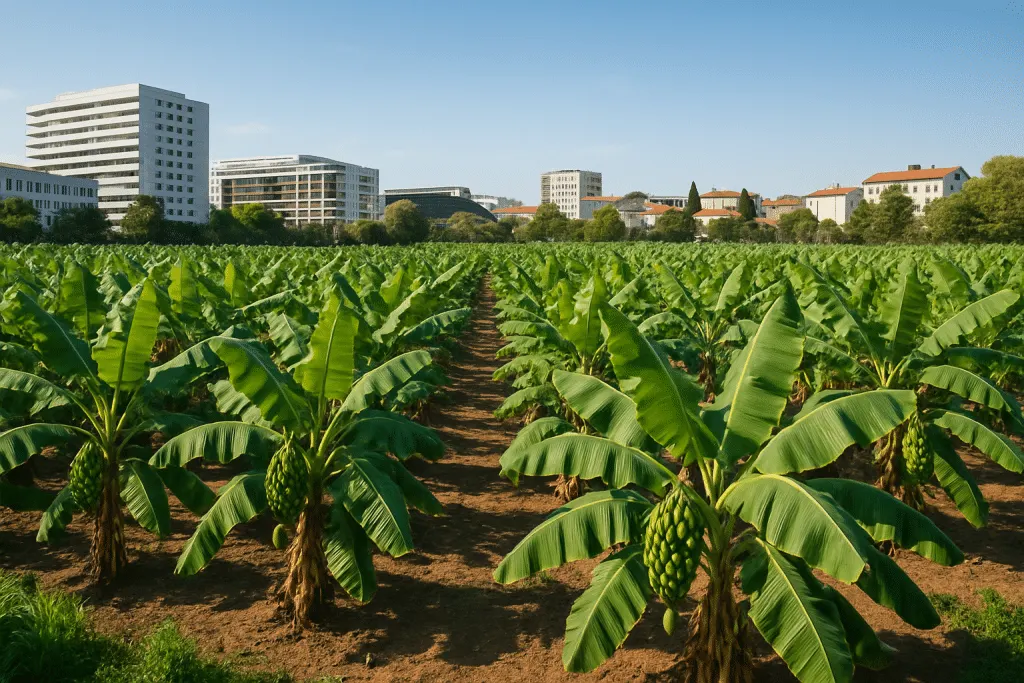
In Montpellier, banana cultivation is emerging as an innovative response to the challenge of climate change.
Contents7
In Montpellier, banana farming is emerging as an innovative response to the challenge of climate change.
As climate change disrupts traditional agricultural practices, some farmers in Montpellier are turning to banana farming, an innovative practice that addresses current climate challenges. This article explores how banana production in this region of France is becoming a promising solution adapted to new climate realities.
Climate change: a challenge for farmers Climate change is altering weather patterns, and consequently, traditional agricultural practices must constantly adapt. In Montpellier, this national issue is concretely illustrated by the establishment of crops that would have seemed unimaginable in the past. Banana farming is emerging as a viable alternative thanks to its ability to adapt to the higher temperatures now experienced in the region.
Why bananas in Montpellier?
Montpellier offers a Mediterranean climate which, despite some changes, remains ideal for growing certain banana varieties. Well-drained soils and mild winters allow this tropical fruit to thrive year-round. This innovative crop is also supported by local initiatives that encourage experimentation with new plant species capable of adapting to changing climatic conditions. An economic and ecological asset.
Beyond climate adaptation, bananas represent an economic opportunity for the region. They guarantee added value for producers while meeting a growing demand for local and exotic products. Furthermore, their cultivation promotes more sustainable agriculture, requiring fewer pesticides and offering better yields on the same land area compared to other crops.
Innovative Cultivation Techniques
Producers in Montpellier have integrated advanced agricultural techniques to optimize banana production. These include drip irrigation and agroforestry, which improve water conservation and soil fertility while reducing the risk of disease. These methods maximize yields while preserving natural resources. An Example to Follow
The success of banana cultivation in Montpellier is inspiring other French regions to consider similar agricultural practices. These initiatives demonstrate that by anticipating climate change through innovation, agriculture can not only adapt but also thrive. To learn more about other innovative initiatives in the region, visit the pop-up shop
Passe la Seconde in Montpellier where other eco-friendly solutions are on display.
Future prospects
As global warming continues, banana cultivation in Montpellier could expand while simultaneously stimulating agricultural innovation. The production models implemented here could serve as a benchmark for redefining French agriculture in the face of new climate challenges. To learn more about local eco-friendly and sporting initiatives, discover how triathlete Charlotte Faivre is bringing the Olympics back to life in Montpellier
Read next
 News from the Montpellier region
Production vidéo à Montpellier : pourquoi les entreprises locales s’y mettent toutes
Montpellier est l’une des métropoles françaises les plus dynamiques en matière de création d’entreprises. Start-up de la
 News from the Montpellier region
Moving to Montpellier: how to manage your housing transition
Every year, thousands of newcomers settle in Montpellier. International students, young professionals, families seeking
 News from the Montpellier region
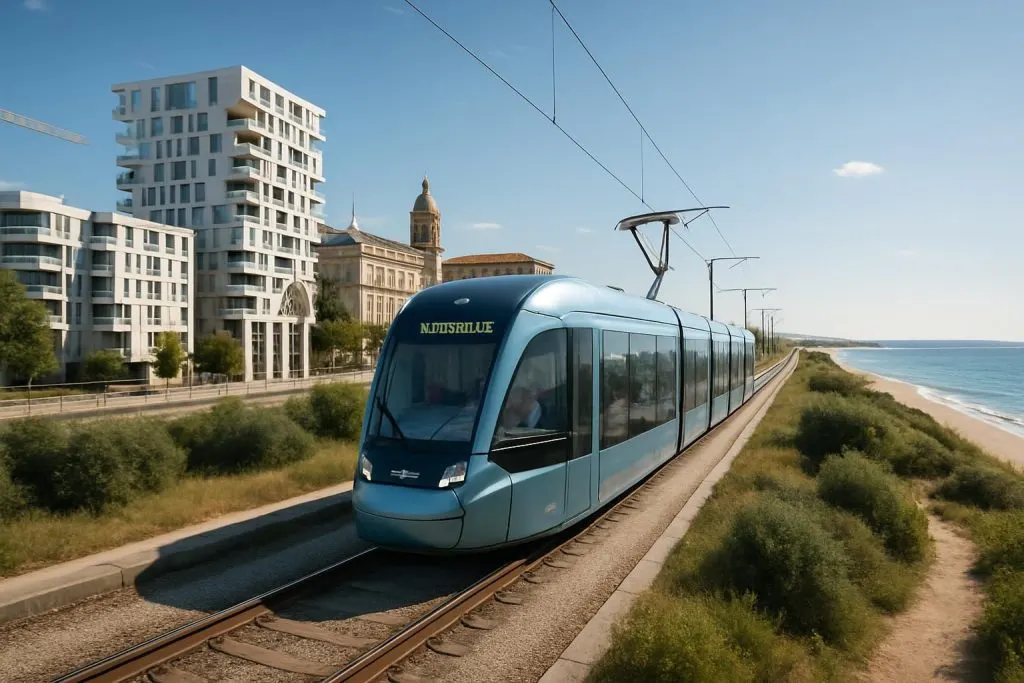
Montpellier: Collision between a car and a tram causes a derailment; the driver of the vehicle flees the scene; traffic is severely disrupted.
Montpellier: Car-Tram Collision, Derailment, and Traffic Disruptions An unusual incident occurred this Friday, January 6