Montpellier: Real estate market between a timid rebound and persistent uncertainties
In Montpellier, the real estate market seems to be slowly recovering after a significant downturn. With an average price hovering around €3,515/m² for existing properties and a slight recent increase of 0.7%, the capital of the Hérault department nevertheless finds itself in a precarious position. Although signs of recovery are observed, uncertainties persist, particularly due to the upcoming commissioning of the fifth tram line and the dynamics facilitated by the rise of tourist rental platforms. Let’s take a closer look at the current state and outlook of the Montpellier real estate market. A tentative recovery after a sharp decline After two years marked by a significant decrease in property values, Montpellier is experiencing a hesitant return to stability. In recent months, the average price of existing properties has recovered slightly, with an increase of 0.7% between September and October. Valéry Flandin, spokesperson for the Hérault Chamber of Notaries, emphasizes that although this rebound is modest, it marks a change from the gloom of previous years. First-time investorsare beginning to return to the market, illustrating a partially restored confidence in this dynamic city in the south of France.
Related reading : Montpellier: Fall in real estate prices, a drop of more than €300 per m²
Related reading : First-time investors return to the Montpellier real estate market
The stakes of the fifth tram line
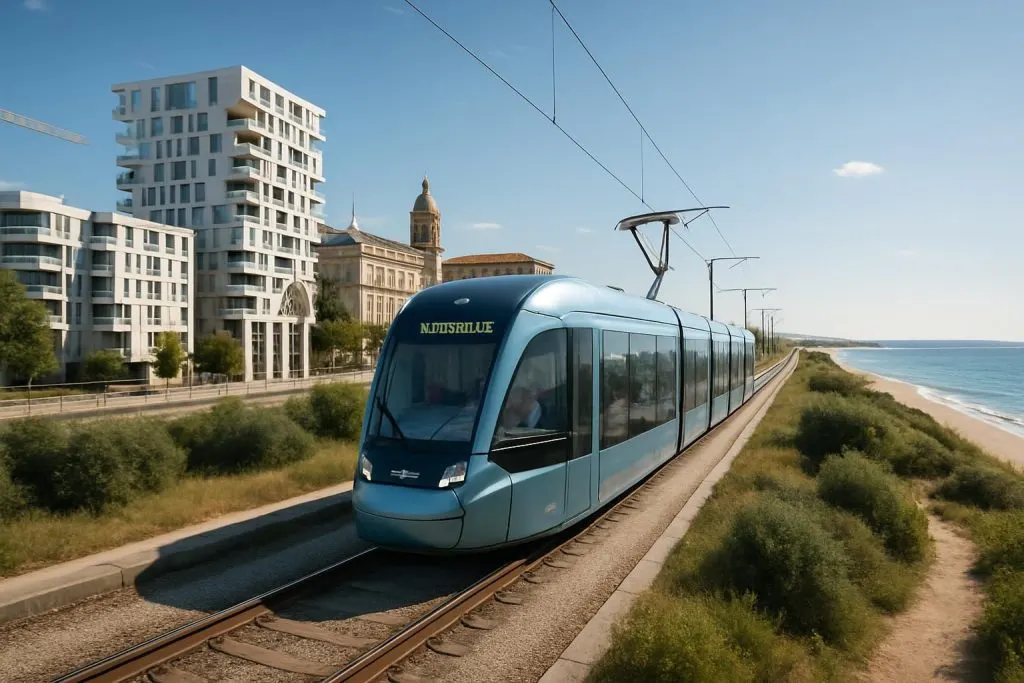
The year 2025 will be pivotal for Montpellier’s attractiveness, with the planned inauguration of its fifth tram line. Connecting 27 stations along a 16 km route This new line will improve mobility between Clapiers, to the north, and Saint-Jean-de-Védas, to the south. This development is being met with cautious optimism, because while it will increase the value of certain districts, it could also exacerbate price pressures in the newly connected neighborhoods. This expansion could mean higher housing costs in the areas served, despite an increased supply that temporarily offsets this precious balance.
The Challenges of Overpriced Properties A persistent challenge in the Montpellier market is that of overpriced properties. While inventory is growing and the number of buyers is increasing, transactions are not always keeping pace, notes Barthélemy Renouard of Unik Immobilier. A property listed above its market value attracts little attention, whether in terms of phone calls or viewings. This phenomenon underscores the need for realistic pricing to capitalize on the slight market recovery. Impact of Tourist Rental PlatformsSimultaneously, the rise in tourist rentals via platforms like Airbnb and Booking is creating additional pressure on the real estate market. The Montpellier city council is taking numerous initiatives to manage the situation and maintain access to the city center for local residents, while also supporting growing tourism. This is a delicate balance that will partly determine the future trajectory of the real estate sector, which faces structural challenges similar to those of other major French cities.
Economic Realities and Outlook
While some observers remain optimistic about these progressive adjustments, others warn of economic vulnerabilities that could counteract this momentum. The deterioration of certain real estate sectors, mirroring the decline of other city infrastructure, such as the stadium whose condition is worsening, offers serious cause for concern. In the real estate context, although new record highs are ambitious, a persistent cycle of falling prices could still prevail, as some analysts legitimately predict. Montpellier continues to navigate these uncertain waters, seeking to capitalize on the rebound while managing the remaining complexities.
/montpellier-chute-des-prix-immobiliers-une-baisse-de-plus-de-300-e-par-m%c2%b2/
Read next
 News from the Montpellier region
Production vidéo à Montpellier : pourquoi les entreprises locales s’y mettent toutes
Montpellier est l’une des métropoles françaises les plus dynamiques en matière de création d’entreprises. Start-up de la
 News from the Montpellier region
Moving to Montpellier: how to manage your housing transition
Every year, thousands of newcomers settle in Montpellier. International students, young professionals, families seeking
 News from the Montpellier region
Montpellier: Collision between a car and a tram causes a derailment; the driver of the vehicle flees the scene; traffic is severely disrupted.
Montpellier: Car-Tram Collision, Derailment, and Traffic Disruptions An unusual incident occurred this Friday, January 6