Montpellier: a bike ride to claim a city truly suitable for cyclists

Contents5
In Montpellier, thousands of cyclists are mobilizing to demand urban developments adapted to their practice. The Vélocité association, the driving force behind this citizen commitment, organized an event bringing together 1,500 to 2,000 people this Sunday. Their demands? Accelerate the development of safe cycle paths and encourage new sustainable mobility habits. A look back at this initiative which is shaking up the metropolis and beyond.
Related reading : Nicolas Le Moigne of the Vélocité association: To advance cycling, we must continue to…
The citizens’ initiative: a Sunday on two wheels
Montpellier was the scene, this Sunday, of a demonstration as joyful as it was demanding. Organized by the Vélocité association, this 7th edition of “Vélo Pour Tous” saw between 1,500 and 2,000 cyclists roam the streets of the city. Dressed in bright colors, accompanied by disguised children, they crisscrossed the roads and trails in a festive atmosphere to remind us of the urgency of adapted developments.
Security still far from optimal
Although Montpellier has started to take steps towards becoming a more cyclist-friendly city, there is still a long way to go. Today only 235 km of cycle paths are planned by the Metropolis. But this network should only be 65% operational by 2026. Meanwhile, cyclists continue to wade through traffic jams and slalom between cars, endangering their daily safety.
A vibrant appeal to local communities
Nicolas Lemoigne, president of the Vélocité Grand Montpellier association, does not mince his words: “Investing for cycling is mobility that costs the least for both users and communities.” Concerned by the persistent obstacles to bicycle mobility, he insists that public authorities intensify their investments in secure infrastructure.
A symbolic route
This Sunday, the participants set off from the Charles-de-Gaulle esplanade for an 8.5 km course. Passing through areas as emblematic as the Corum and the Beaux-Arts district, the procession finally reached its objective at the Domaine d’O. This citizen route reminded us of the importance of a fluid and safe cycling network, which is still clearly insufficient.
Innovative solutions to explore
Montpellier now finds itself at a crossroads. Should it persist in inaction or embrace innovative solutions that would change the face of local urban planning? Let us imagine tunnels transformed into oases for pedestrians and cyclists, or even take advantage of some road closures to reduce car use and free up space for cyclists. The city thus has the opportunity to transform itself into a model of inclusive and sustainable mobility.
Read next
 News from the Montpellier region
Production vidéo à Montpellier : pourquoi les entreprises locales s’y mettent toutes
Montpellier est l’une des métropoles françaises les plus dynamiques en matière de création d’entreprises. Start-up de la
 News from the Montpellier region
Moving to Montpellier: how to manage your housing transition
Every year, thousands of newcomers settle in Montpellier. International students, young professionals, families seeking
 News from the Montpellier region
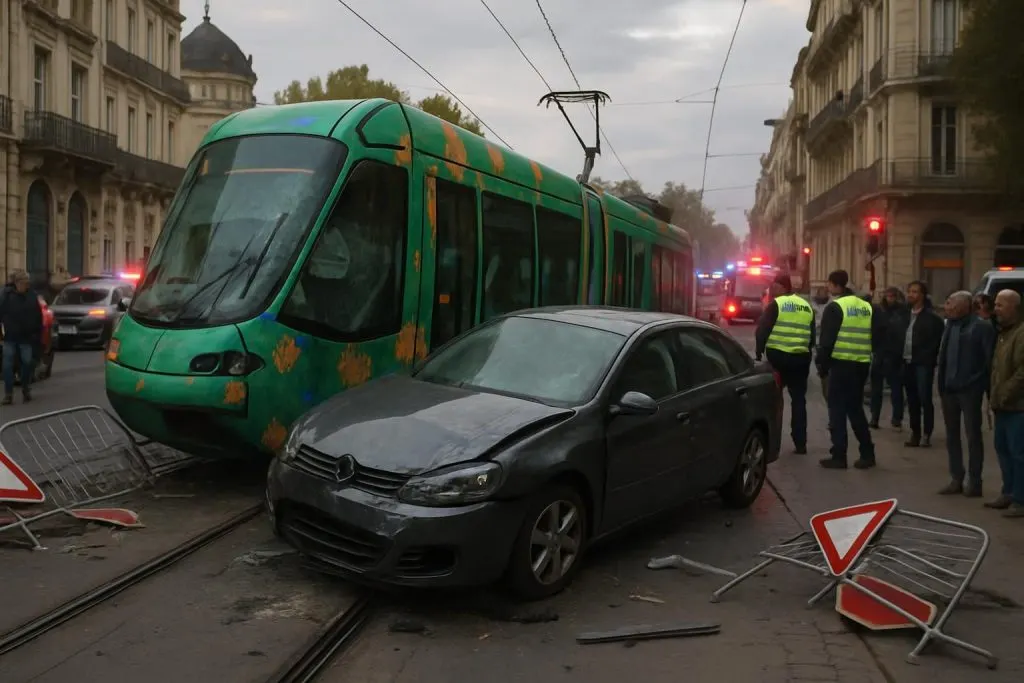
Montpellier: Collision between a car and a tram causes a derailment; the driver of the vehicle flees the scene; traffic is severely disrupted.
Montpellier: Car-Tram Collision, Derailment, and Traffic Disruptions An unusual incident occurred this Friday, January 6