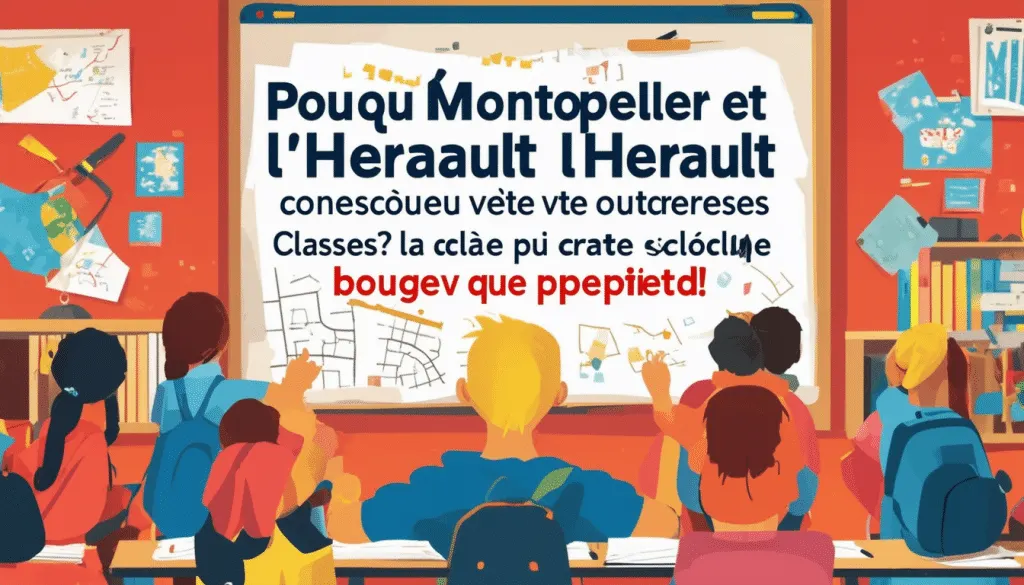
Why are Montpellier and Hérault experiencing a real educational revolution with the opening and closing of classes? Discover the school map which is moving more than expected!
Contents5
In the educational landscape of Montpellier and Hérault, the movements of opening and closing of classes are shaping an unexpected educational revolution. This evolution of the school map raises many questions about the issues and transformations underway. Let’s dive into the heart of these changes to better understand this educational metamorphosis in progress.
An Unexpected Drop in School Demography
The academic director of National Education Services (Dasen), Catherine Côme, unveiled a new school map to the teaching unions on July 8. Faced with a significant drop in the number of students in 1er degree of Hérault, with a deficit of 286 students, drastic adjustment measures become necessary. In January, during the first CSA 34 (social board of directors), it was announced that the department would lose 19 classes at the start of the school year in September, a predictable shock for many.
End of Year Adjustments
The second meeting of CSA 34, postponed from June to July because of the legislative elections, brought other surprises. The new school map provides for the opening of 14 additional classes and the closure of 16 others, totaling 30 adjustments compared to 18 the previous year. This upheaval during the summer period took the educational teams by surprise, complicating their preparations for the start of the school year. The vice-president of Snalc Montpellier, Jessica Boyer, expresses her dissatisfaction with these late movements which disrupt the serenity of the preparations.
Maintaining Red Lines
The academic director stressed the importance of not exceeding the threshold of 24 students per class in the main section, a priority stated for this start of the school year. Thus, the scheduled closure of a class at Charles-Dickens, Montpellier, was canceled, and openings were decided for the Jeanne-Moreau and Germaine-Richier schools. Despite these efforts, the unions point out that these adjustments remain insufficient and point out that the European average is 19 students per class.
The Consequences of Closures
The closure of 16 classes will result in a significant overload of staff. In Montpellier, for example, the Pablo-Neruda school will have 31.50 students per class after closure, while the Georges Clémenceau school in Mèze will have an average of 25.5 students per class. Jessica Boyer insists that exceeding 24 students per class is a red line that should not be crossed.
The Next Challenges
The finalization of the school map is expected for the first week of September, with the aim of starting the school year with the most stable structures possible. Catherine Côme assures that adjustments will be minimal once the school year begins. It remains to be seen how these changes will influence the daily lives of teachers, students and their families. Adaptation challenges and new educational dynamics will be at the heart of future discussions.
In conclusion, the school map of Montpellier and Hérault for this new school year represents a real revolution, marked by unexpected openings and closings. These adjustments, dictated by demographic and regulatory factors, reflect the contemporary challenges that the French education system must face.
Read next
 News from the Montpellier region
Production vidéo à Montpellier : pourquoi les entreprises locales s’y mettent toutes
Montpellier est l’une des métropoles françaises les plus dynamiques en matière de création d’entreprises. Start-up de la
 News from the Montpellier region
Moving to Montpellier: how to manage your housing transition
Every year, thousands of newcomers settle in Montpellier. International students, young professionals, families seeking
 News from the Montpellier region
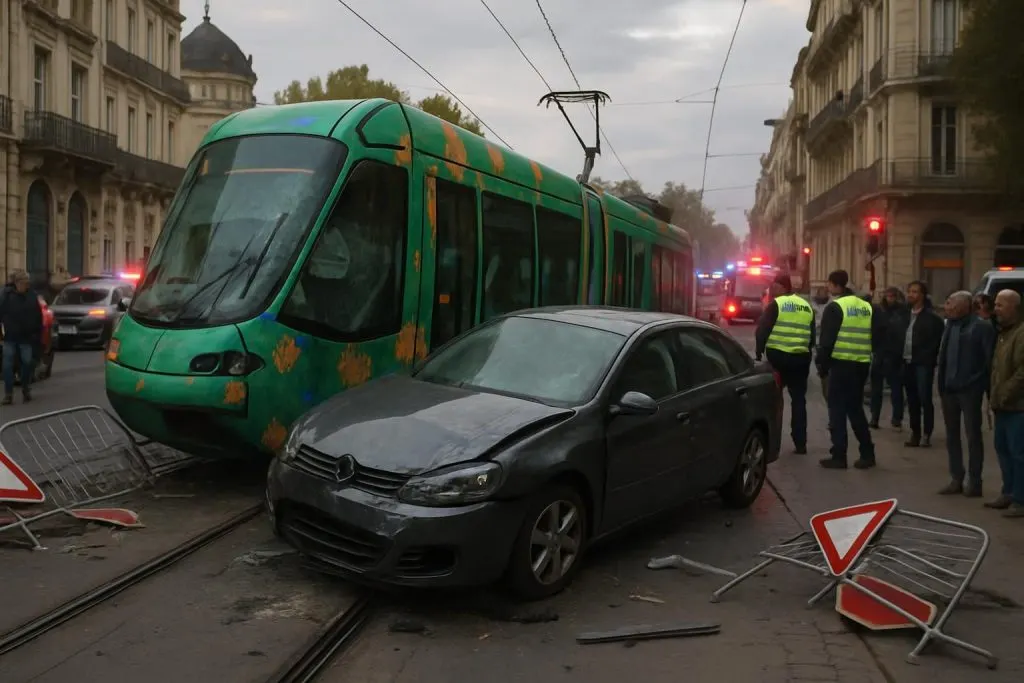
Montpellier: Collision between a car and a tram causes a derailment; the driver of the vehicle flees the scene; traffic is severely disrupted.
Montpellier: Car-Tram Collision, Derailment, and Traffic Disruptions An unusual incident occurred this Friday, January 6