High-speed rail line Montpellier-Perpignan via Béziers: Michaël Delafosse emphasizes the crucial importance and urgency of this project
Contents4
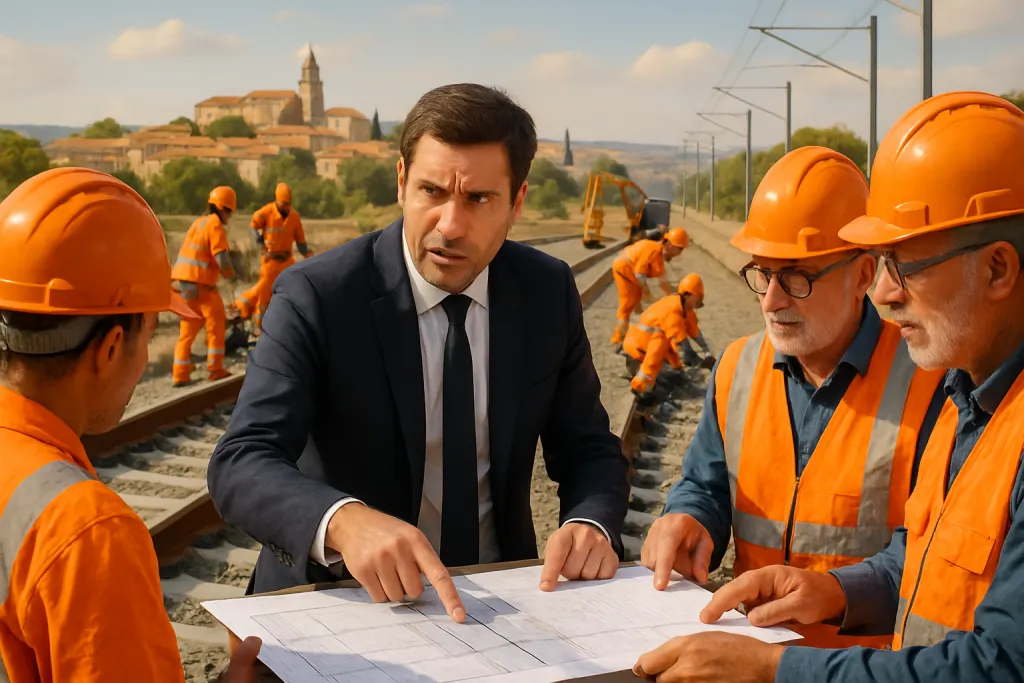
The Montpellier-Perpignan High-Speed Rail Line (LNMP) is a key high-speed rail project for the economic development and connectivity of the Occitanie region. At a recent steering committee meeting, Michaël Delafosse, President of Montpellier Méditerranée Métropole, emphasized the crucial importance of this project, stressing how vital its rapid completion is for the regional economy and the improvement of transport infrastructure in Europe.
Related reading : Occitanie: The Montpellier-Perpignan high-speed rail line is on schedule, with the first…
The decisive role of the Montpellier-Perpignan high-speed rail line for the Occitanie region
The Montpellier-Perpignan high-speed rail line via Béziers represents a major step forward for Occitanie, a region distinguished by its economic dynamism. This rail project, whose support was reaffirmed at the last steering committee meeting chaired by Pierre-André Durand and Carole Delga, aims to reduce travel times and improve intra-European connectivity between the south and north of the continent.
Michaël Delafosse: A plea for the urgency and importance of the project
Michaël Delafosse emphasized the urgent nature of the project to create the rail link between Montpellier and Perpignan. According to him, this new line is crucial for stimulating the regional economy, boosting employment, and transforming the transport landscape of Occitanie. Phase 1, consisting of a section between Montpellier and Béziers, with work scheduled to begin in 2029, is central to these strategic priorities.
An ambitious project supported by Europe and local authorities
This project is not only vital for France, but also enjoys clear support from the European Union. Mathieu Grosch, European coordinator of the Mediterranean Corridor, emphasized the importance of this section for the European transport corridor, which would relieve congestion on existing lines and accommodate the anticipated increase in freight and passenger traffic.
A key step: financing and timeline
At the last board meeting of the Montpellier-Perpignan High-Speed Line Company, a new financing agreement of €68.6 million was adopted, marking a further step towards the realization of this ambitious project. Tenders are expected in September 2026, with construction scheduled to begin in 2029, as originally planned. The commitment of the French government and local authorities, reinforced by European support, provides a robust timeline for this project.
Consultations and studies: preparing for the future of the Montpellier-Perpignan High-Speed LineTo ensure the project’s success and incorporate local aspirations, public consultations have been initiated. Michaël Delafosse reiterated that these consultations are essential for shaping a line that meets the needs of local residents. In parallel, studies on attractiveness and service are also underway to involve the urban areas of Sète and Agde in this initiative.
Read next
 News from the Montpellier region
Production vidéo à Montpellier : pourquoi les entreprises locales s’y mettent toutes
Montpellier est l’une des métropoles françaises les plus dynamiques en matière de création d’entreprises. Start-up de la
 News from the Montpellier region
Moving to Montpellier: how to manage your housing transition
Every year, thousands of newcomers settle in Montpellier. International students, young professionals, families seeking
 News from the Montpellier region
Montpellier: Collision between a car and a tram causes a derailment; the driver of the vehicle flees the scene; traffic is severely disrupted.
Montpellier: Car-Tram Collision, Derailment, and Traffic Disruptions An unusual incident occurred this Friday, January 6