Is the battle for the survival of Montpellier definitively underway?
Contents5
Faced with ecological and economic challenges, Montpellier finds itself at a crucial turning point to ensure its sustainability. Whether it is the fight to remain in the sporting elite with Montpellier Hérault Rugby, the management of environmental crises threatening its biodiversity, or the social challenge of protecting its most vulnerable, the city must redouble its efforts to survive. The question arises: is Montpellier ready to fight this battle on all fronts or is it destined to suffer the consequences of its inaction?
Montpellier Hérault Rugby: a fight to stay in the elite
THE Montpellier Hérault Rugby (MHR) is currently fighting not to lose its place in the Top 14, a difficult change of course after its poor results. Through ambitious recruitments, including international talents like Billy Vunipola, the club is engaged in a fierce battle to avoid relegation. The assistant coach, Antoine Battut, bluntly expressed that every game is now a litmus test, turning the pressure of maintaining into a driving force for the team.
Environmental crises: a threat to biodiversity
Montpellier also faces crucial environmental challenges. The pollution of the Lez represents a potential threat which could turn the city into a prohibited zone if no proactive measures are taken. Additionally, a recent incident resulted in the death of hundreds of fish in the Coulazou, calling for a significant financial penalty and emphasizing the need for more rigorous management of natural resources.
The unintended consequences of pollution
Inaction in the face of these crises could not only compromise the ecological health of Montpellier, but also its attractiveness and quality of life. With increasingly extreme temperatures, the homeless in Montpellier are also bearing the brunt of these climatic conditions, raising serious concerns about their fate. We cannot ignore their cries of distress in the face of a heat that had become overwhelming.
A social and human challenge
Socially, the city of Montpellier faces major challenges to ensure the safety and well-being of its most vulnerable residents. Collective action is essential to address these interconnected issues. The city’s historic past, marked by incessant battles for its survival, must inspire a new era of citizen and political engagement.
The legacy of historic resistance
Montpellier, still standing despite the upheavals of history, from the Hundred Years’ War to the Liberation in 1944, has proven its resilience in the face of challenges. Today, the city must reactivate this fighting spirit to protect its achievements and build a secure and prosperous future. Modernizing its infrastructure, combined with green and inclusive policies, can transform the city into a model of urban resilience.
Read next
 News from the Montpellier region
Production vidéo à Montpellier : pourquoi les entreprises locales s’y mettent toutes
Montpellier est l’une des métropoles françaises les plus dynamiques en matière de création d’entreprises. Start-up de la
 News from the Montpellier region
Moving to Montpellier: how to manage your housing transition
Every year, thousands of newcomers settle in Montpellier. International students, young professionals, families seeking
 News from the Montpellier region
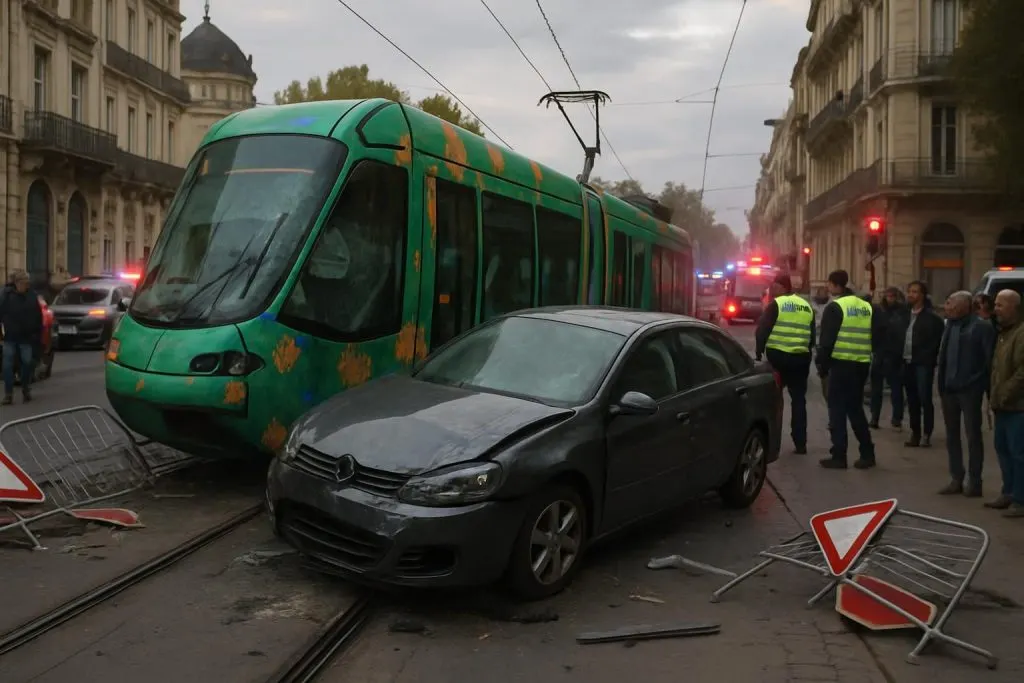
Montpellier: Collision between a car and a tram causes a derailment; the driver of the vehicle flees the scene; traffic is severely disrupted.
Montpellier: Car-Tram Collision, Derailment, and Traffic Disruptions An unusual incident occurred this Friday, January 6