Report: Montpellier is changing in the face of the challenges of heat islands
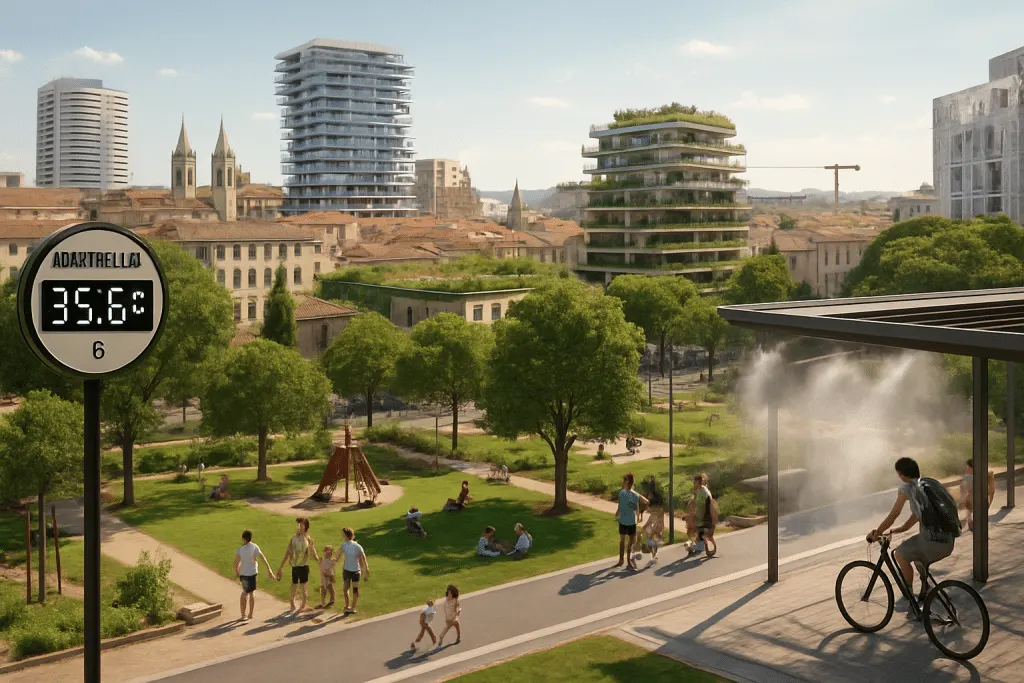
Montpellier, a city with an already remarkable climate, is facing a major climate challenge: urban heat islands. These areas of the city experience temperatures much higher than their surrounding areas. In this report, we explore the city’s efforts to address this growing problem, the impact these heat islands have on the population, and proposed solutions for a cooler future. Understanding Heat Islands in Montpellier Urban heat islands are well-documented phenomena, but in Montpellier, they are taking on a particularly dramatic dimension. Due to rapid urbanization and the excessive use of heat-absorbing materials, some parts of the city are literally turning into furnaces, trapping heat and making urban life less bearable, especially in summer. According to this report, some urban initiatives have recently been implemented, such as the greening of public spaces and the creation of shaded areas, with the explicit aim of countering these local warming effects. Consequences for Daily Life
For residents, living under a
heat island not only means enduring high temperatures, but also facing health impacts. An increase in respiratory illnesses and cases of heat exhaustion has been noted. Homes, mostly poorly insulated, struggle to provide respite from intense heat waves. As a result, Montpellier residents are taking individual measures, such as using air conditioning more frequently, although this indirectly contributes to worsening the overall urban heat problem.
Promising Initiatives in Montpellier Despite this alarming situation, Montpellier is not standing still. The city is making considerable efforts to transform the city into a sustainably resilient metropolis. Among these projects, the implementation of green roofs and green walls is emerging, bringing a breath of fresh air to dense urban spaces.In addition, the city is working to expand its green spaces through the creation of new parks and the development of vertical gardens, as illustrated by Météo-France’s
temperature predictions, which only increase the urgency of such actions.
A future under control? In this context, Montpellier is resolutely committed to mitigating the effects of heat islands. Current and planned efforts give hope for a future where the city can manage summer heat more effectively. However, combating this phenomenon depends not only on the authorities but also requires collective mobilization to adopt more environmentally friendly behaviors. As Montpellier continues its transformation, it is becoming a model for other cities facing similar challenges, paving the way for innovative and sustainable solutions in the face of an ever-changing climate.
/meteo-france-predit-que-paris-pourrait-vivre-les-temperatures-de-montpellier-dici-la-fin-du-siecle/
Read next
 News from the Montpellier region
Production vidéo à Montpellier : pourquoi les entreprises locales s’y mettent toutes
Montpellier est l’une des métropoles françaises les plus dynamiques en matière de création d’entreprises. Start-up de la
 News from the Montpellier region
Moving to Montpellier: how to manage your housing transition
Every year, thousands of newcomers settle in Montpellier. International students, young professionals, families seeking
 News from the Montpellier region
Montpellier: Collision between a car and a tram causes a derailment; the driver of the vehicle flees the scene; traffic is severely disrupted.
Montpellier: Car-Tram Collision, Derailment, and Traffic Disruptions An unusual incident occurred this Friday, January 6